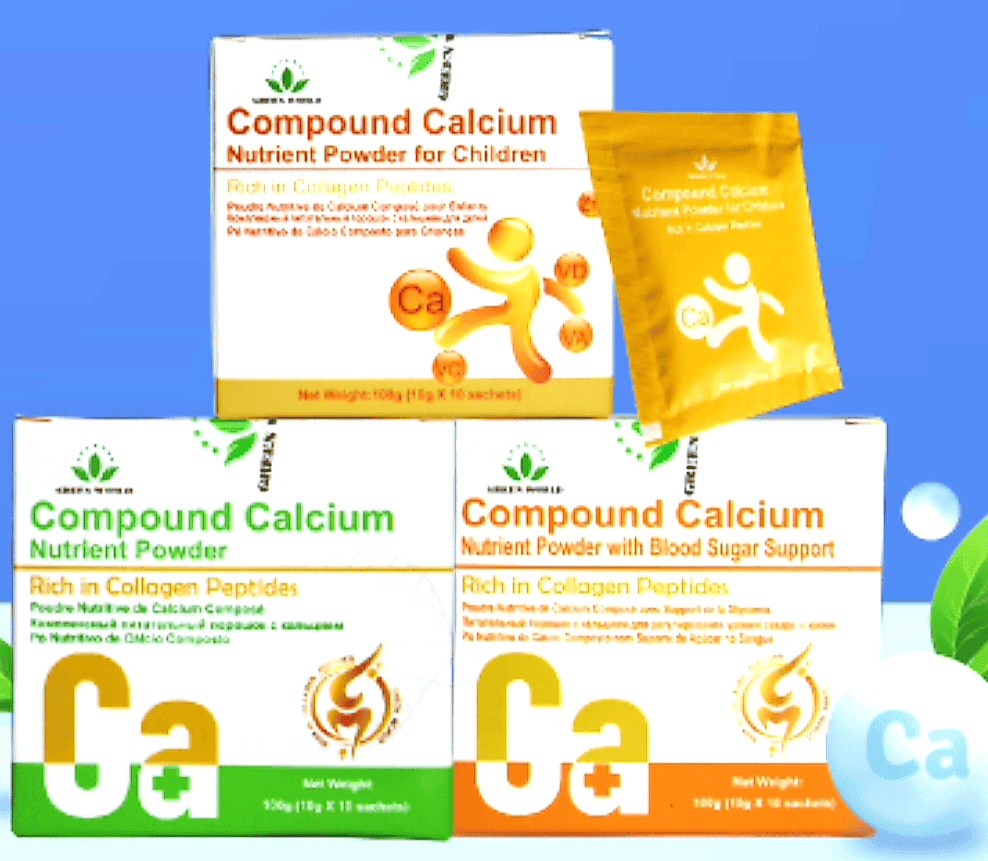
These three products are calcium supplements for adults, people with elevated blood sugar levels, and
children, respectively. The main ingredients of the Calcium Series products include Zymolytic Bone
Calcium Powder, Fish Collagen Peptides, Sodium Hyaluronate, Vitamin A, C, D, K and Ferrous Lactate.
- During bone remodeling, osteoblasts (bone-forming cells) produce collagen, which is then mineralized
with calcium and phosphate to form new bone tissue. Collagen synthesis is the first step in bone
formation and is essential for creating a strong, flexible bone matrix.
- Calcium provides the organic framework for bones, acting like a scaffolding that supports the
mineralized components (mainly calcium and phosphate) that give bones their hardness. Without
collagen, bones would be brittle and lack the necessary flexibility to withstand stress and
pressure.
- Calcium is a key component of the mineralized bone matrix. During bone remodeling, osteoblasts
(bone-forming cells) produce collagen, which forms the organic matrix of bone. Calcium, along with
phosphate, then combines with this collagen framework to form hydroxyapatite, a mineral compound
that provides bones with their strength and rigidity.
- Vitamin D promotes the absorption of calcium in the small intestine. Without sufficient vitamin D,
the body is unable to effectively absorb calcium from the diet, even if dietary calcium intake is
adequate.
- Osteocalcin is a protein produced by osteoblasts (bone-forming cells) that helps bind calcium to the
bone matrix. However, osteocalcin needs to be activated in order to function properly. Vitamin K2
activates osteocalcin by adding a chemical group called a carboxyl group. This activation process
allows osteocalcin to bind calcium effectively and incorporate it into the bone structure. In other
words, vitamin K2 ensures that calcium is properly deposited in the bones where it is needed for
strength and mineralization.
- Vitamin K2 plays a key role in directing calcium to the bones and teeth, where it is beneficial, and
away from soft tissues, such as arteries, kidneys, and other organs, where it could cause harm.
- Iron improves bone density. Some studies suggest that iron deficiency may contribute to lower bone
density or reduced bone strength. This could be due to impaired bone remodeling processes, including
a reduction in the number or activity of osteoblasts and osteoclasts. As a result, bones may become
weaker and more prone to fractures.

 Contact Us on WhatsApp